
Introduction
Human beings make mistakes. Even highly trained professionals, experienced operators, skilled engineers, surgeons, pilots, and software developers are capable of errors. Fatigue, distraction, overconfidence, poor design, stress, interruptions, unclear instructions, and complex processes all increase the possibility of defects. Organizations spend millions of dollars every year fixing problems that could have been prevented at the source. This is where Poka-Yoke becomes one of the most powerful concepts in Lean Manufacturing and Quality Management.
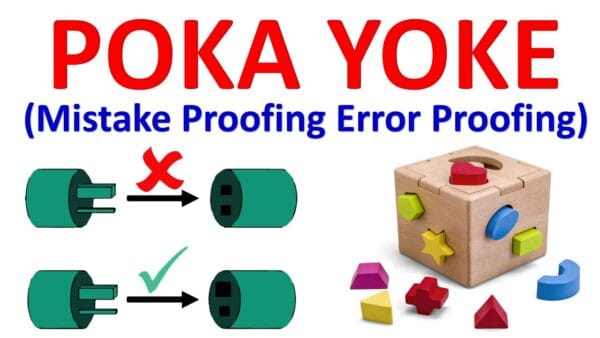
Poka-Yoke is a Japanese approach focused on designing systems, products, tools, and processes in a way that either prevents mistakes from happening or detects them before they become defects. Instead of blaming people, Poka-Yoke improves the process itself.
Today, companies across automotive, medical devices, aerospace, pharmaceuticals, electronics, software, logistics, food processing, and healthcare rely on mistake-proofing techniques to improve safety, reduce rework, lower costs, and increase customer satisfaction.
At the same time, people searching on Google and YouTube are increasingly asking questions such as:
- What is Poka-Yoke in Lean Six Sigma?
- What are real-life examples of Poka-Yoke?
- How does mistake-proofing reduce defects?
- What is the difference between prevention and detection Poka-Yoke?
- How do you implement Poka-Yoke in manufacturing?
- What are the best examples of Poka-Yoke in daily life?
- How is Poka-Yoke used in healthcare and medical devices?
- What are the types of Poka-Yoke?
- What are the advantages and disadvantages of Poka-Yoke?
- How does Poka-Yoke support Zero Defect Quality?
This complete guide answers all of these questions in depth.
The article explores the history of Poka-Yoke, its principles, classifications, practical applications, industry case studies, implementation steps, common challenges, Lean integration, digital transformation, and future trends. Whether you are a student, quality engineer, Lean practitioner, Six Sigma professional, manufacturing manager, healthcare specialist, or business leader, this guide will help you understand how mistake-proofing creates reliable and high-quality systems.

What is Poka-Yoke?
Poka-Yoke is a Japanese term that means “mistake-proofing” or “error prevention.”
The concept was developed to eliminate defects by preventing human errors or detecting them immediately before they result in problems.
The term comes from:
- “Poka” = inadvertent mistake
- “Yoke” = prevention
Instead of assuming that people will always perform perfectly, Poka-Yoke assumes that mistakes are natural and processes should be designed intelligently to minimize risk.
A good Poka-Yoke system:
- Prevents incorrect actions
- Makes wrong operations impossible
- Detects abnormalities immediately
- Stops defects from moving to the next stage
- Simplifies work
- Improves safety and reliability
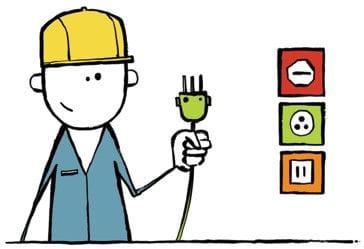
The idea became widely popular through the Toyota Production System (TPS), where quality was built directly into the process instead of inspected at the end.
Traditional quality systems often relied heavily on inspection after production. However, inspection alone does not prevent defects; it only identifies them after resources have already been consumed.
Poka-Yoke changes this philosophy completely.
Instead of asking:
“How do we inspect defects?”
It asks:
“How do we prevent defects from occurring in the first place?”
That shift in thinking transformed manufacturing and later influenced healthcare, aviation, software development, logistics, and service industries.
History and Origin of Poka-Yoke
The origins of Poka-Yoke are closely associated with the Toyota Production System and industrial engineer Shigeo Shingo.
During the post-World War II industrial growth period in Japan, manufacturers faced increasing pressure to improve quality while reducing waste and production costs.
Shigeo Shingo observed that many production defects were not caused by machine failures but by human mistakes.
Examples included:
- Missing components during assembly
- Incorrect orientation of parts
- Skipped process steps
- Wrong fastener usage
- Incomplete inspection
- Improper labeling
- Misaligned fixtures
Traditional management often blamed operators for defects. Shingo believed this approach was ineffective because humans naturally make occasional errors.
Instead of trying to eliminate human mistakes entirely, he proposed designing systems that make errors impossible or immediately visible.
One famous example involved a switch assembly process where workers occasionally forgot to insert springs before assembly. Instead of retraining workers repeatedly, the process was redesigned so the correct number of springs had to be picked up before assembly could continue.
This simple redesign dramatically reduced defects.
Initially, the term “baka-yoke” meaning “fool-proofing” was used. However, because the phrase sounded disrespectful to workers, it was changed to “Poka-Yoke,” which emphasizes preventing mistakes rather than blaming people.
Over time, the philosophy became a foundational element of:
- Lean Manufacturing
- Total Quality Management (TQM)
- Six Sigma
- Operational Excellence
- Continuous Improvement
- Zero Defect Quality
Today, Poka-Yoke principles are integrated into products and systems worldwide.
Why Poka-Yoke Matters ??
Organizations today operate in highly competitive environments where even small defects can result in:
- Product recalls
- Customer dissatisfaction
- Safety incidents
- Regulatory penalties
- Warranty claims
- Production delays
- Increased operational costs
- Brand reputation damage
In industries such as medical devices, aerospace, automotive, and pharmaceuticals, a single defect can have life-threatening consequences.
Poka-Yoke helps organizations move from reactive quality control to proactive quality assurance.
Key Benefits of Poka-Yoke
1. Reduces Defects
Mistake-proofing prevents incorrect actions before defects occur.
2. Improves Product Quality
Consistent processes create consistent outputs.
3. Enhances Safety
Many safety systems are essentially Poka-Yoke mechanisms.
4. Reduces Rework and Scrap
Preventing defects reduces wasted material, labor, and time.
5. Improves Productivity
Workers spend less time fixing errors.
6. Lowers Training Dependency
Well-designed systems reduce reliance on memory.
7. Builds Customer Trust
Reliable products improve satisfaction and loyalty.
8. Supports Regulatory Compliance
Industries with strict compliance requirements benefit significantly.
9. Simplifies Operations
Processes become easier and more intuitive.
10. Encourages Continuous Improvement
Teams start thinking proactively about defect prevention.
Core Principles of Poka-Yoke
1. Humans Will Make Mistakes
Poka-Yoke accepts that human error is unavoidable.
The goal is not perfection from people.
The goal is perfection from the process.
2. Prevent Defects at the Source
It is better to stop mistakes early than detect them later.
3. Build Quality into the Process
Quality should not depend entirely on inspection.
4. Make Incorrect Actions Impossible
Good design naturally guides correct behavior.
5. Simplify Work
Complexity increases error probability.
6. Immediate Feedback is Essential
Operators should instantly know when something is wrong.
7. Standardization Supports Consistency
Standard processes reduce variability.
Types of Poka-Yoke
Poka-Yoke systems are commonly divided into two major categories:
- Prevention-Based Poka-Yoke
- Detection-Based Poka-Yoke
1. Prevention-Based Poka-Yoke
These systems stop mistakes from occurring.
The process physically or logically prevents incorrect action.
Examples
- USB devices that fit only one way
- SIM card trays with unique orientation
- Car ignition requiring brake pedal engagement
- Microwave ovens that stop when the door opens
- Medical connectors designed to prevent wrong tubing connections
Advantages
- Strongest form of error control
- Prevents defects entirely
- Reduces inspection dependency
Limitation
- May require higher upfront design effort
2. Detection-Based Poka-Yoke
These systems identify mistakes quickly so corrective action can be taken before defects reach customers.
Examples
- Alarm systems
- Warning lights
- Barcode verification
- Sensor-based inspection
- Spell-check in software
- Seatbelt reminders
Advantages
- Easier to implement
- Useful for existing processes
Limitation
- Errors still occur before detection
Common Poka-Yoke Methods
1. Contact Method
Detects abnormalities through physical characteristics.
Example
A fixture detects whether the correct part dimension is present.
2. Fixed-Value Method
Ensures a specific number of movements or actions occur.
Example
Counting screws during assembly.
3. Motion-Step Method
Ensures process steps occur in the proper sequence.
Example
Software requiring mandatory field completion.
Everyday Life Examples of Poka-Yoke
Many people use mistake-proofing devices daily without realizing it.
1. Treadmill Safety Key
The treadmill stops automatically if the safety key disconnects.
2. Car Safety Alerts
Modern vehicles include:
- Seatbelt reminders
- Lane departure warnings
- Parking sensors
- Collision avoidance systems
- Reverse camera alerts
3. Microwave Door Interlock
The microwave cannot operate when the door is open.
4. Elevator Door Sensors
Doors reopen automatically when an obstruction is detected.
5. USB Connectors
The shape prevents incorrect insertion.
6. Childproof Medicine Bottles
Require a special motion to open.
7. Leak-Proof Containers
Locking lids prevent spills.
8. Washing Machine Door Locks
Prevent opening during operation.
9. Sink Overflow Drain
Prevents flooding when water rises excessively.
10. Spell Check in Software
Detects typing mistakes before communication is sent.
11. Automatic Gear Shift Locks
Require brake pedal engagement before shifting.
12. Gas Pump Nozzle Design
Prevents fuel leakage and incorrect engagement.
13. SD Card Orientation
The shape prevents incorrect insertion.
14. Lawnmower Safety Bar
Releasing the handle stops the blade.
15. Wheelchair Anti-Tip Wheels
Prevent backward tippi
I hope this blog helped in understanding the basic concept in a simplified manner, watch out for more such stuff in the future.
📢📢 𝑺𝒐𝒄𝒊𝒂𝒍 𝑴𝒆𝒅𝒊𝒂 𝑳𝒊𝒏𝒌:
Thanks!!!
For questions please leave them in the comment box below and I’ll do my best to get back to those in a timely fashion. And remember to subscribe to Digital eLearning YouTube channel to have our latest videos sent to you while you sleep.